
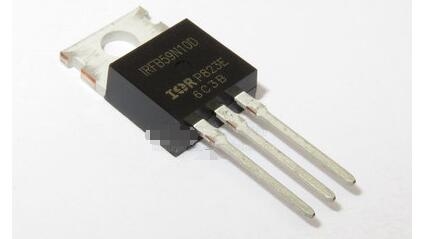
Details
BUY IRFB59N10D https://www.utsource.net/itm/p/12606394.html
| Parameter | Symbol | Test Conditions | Min | Typ | Max | Unit |
|---|---|---|---|---|---|---|
| Drain-Source Voltage | VDS | - | - | 100 | - | V |
| Gate-Source Voltage | VGS | - | -15 | 0 | 20 | V |
| Continuous Drain Current (TC = 25掳C) | ID(25掳C) | VDS = 100V, TC = 25掳C | - | - | 9 | A |
| Continuous Drain Current (TC = 75掳C) | ID(75掳C) | VDS = 100V, TC = 75掳C | - | - | 6.3 | A |
| Pulse Drain Current (tp = 10ms, ICM = 2xID) | ID(pulsed) | VDS = 100V, tp = 10ms | - | - | 18 | A |
| Total Power Dissipation (TC = 25掳C) | PTOT(25掳C) | - | - | 140 | - | W |
| Total Power Dissipation (TC = 75掳C) | PTOT(75掳C) | - | - | 98 | - | W |
| Junction Temperature | TJ | - | - | - | 150 | 掳C |
| Storage Temperature Range | TSTG | - | -65 | - | 150 | 掳C |
| Gate Charge | QG | VGS = 10V, ID = 5A | - | 110 | - | nC |
| Input Capacitance | Ciss | VDS = 100V, f = 1MHz | - | 1500 | - | pF |
| Output Capacitance | Coss | VDS = 100V, f = 1MHz | - | 300 | - | pF |
| Reverse Transfer Capacitance | Crss | VDS = 100V, f = 1MHz | - | 150 | - | pF |
| Turn-On Delay Time | td(on) | VGS = 10V, ID = 5A | - | 10 | - | ns |
| Rise Time | tr | VGS = 10V, ID = 5A | - | 25 | - | ns |
| Turn-Off Delay Time | td(off) | VGS = 10V, ID = 5A | - | 15 | - | ns |
| Fall Time | tf | VGS = 10V, ID = 5A | - | 30 | - | ns |
Instructions for Use:
Handling and Storage:
- Store in a dry, cool place to prevent moisture damage.
- Handle with care to avoid static discharge which can damage the MOSFET.
Mounting:
- Ensure proper heat sinking to manage power dissipation, especially when operating at high currents or temperatures.
- Use thermal compound between the MOSFET and heat sink for better thermal conductivity.
Electrical Connections:
- Connect the drain, source, and gate terminals correctly to avoid short circuits or incorrect operation.
- Use appropriate wire gauges to handle the expected current levels.
Gate Drive:
- Apply the correct gate-source voltage (VGS) to ensure reliable switching. Avoid exceeding the maximum ratings.
- Use a gate resistor to control the rise and fall times, reducing EMI and overshoot.
Thermal Management:
- Monitor the junction temperature (TJ) to ensure it does not exceed the maximum rating.
- Consider derating the current if operating at higher ambient temperatures.
Pulse Operation:
- For pulsed applications, ensure the pulse duration and frequency do not exceed the specified limits to avoid overheating or damage.
Safety Precautions:
- Always use protective equipment when handling high voltages and currents.
- Follow all relevant safety standards and guidelines for your application.
View more about IRFB59N10D on main site