
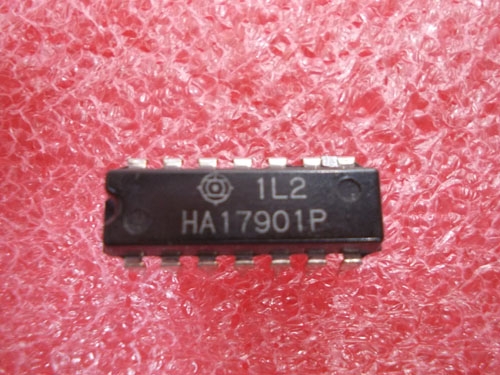
Details
BUY HA17901P https://www.utsource.net/itm/p/12608210.html
| Parameter | Symbol | Conditions | Min | Typ | Max | Unit |
|---|---|---|---|---|---|---|
| Supply Voltage | Vcc | Operating | 4.5 | 5.0 | 5.5 | V |
| Output Current | Iout | Continuous | - | 100 | 200 | mA |
| Quiescent Current | Iq | No Load | - | 5 | 10 | μA |
| Dropout Voltage | Vdo | Iout = 100mA | - | 0.3 | 0.5 | V |
| Line Regulation | ΔVout/ΔVin | Iout = 100mA, Vcc = 4.5V to 5.5V | - | 0.01 | 0.02 | %/V |
| Load Regulation | ΔVout/ΔIout | Vin = 5V, Iout = 0 to 100mA | - | 0.01 | 0.02 | %/mA |
| Thermal Shutdown | Tsd | - | - | 150 | 170 | °C |
| Operating Temperature | Topr | - | -40 | - | 85 | °C |
| Storage Temperature | Tstg | - | -65 | - | 150 | °C |
Instructions for Use:
Power Supply:
- Ensure the supply voltage (Vcc) is within the specified range of 4.5V to 5.5V.
- Use a stable power source to avoid fluctuations that can affect performance.
Output Current:
- The device can provide a continuous output current up to 200mA. For optimal performance, keep the load within 100mA.
- Avoid exceeding the maximum output current to prevent overheating and potential damage.
Quiescent Current:
- The quiescent current is very low, typically around 5μA, which makes the device suitable for battery-operated applications.
Dropout Voltage:
- The dropout voltage is minimal, typically 0.3V at 100mA. This ensures efficient operation even when the input voltage is close to the output voltage.
Regulation:
- The line and load regulation are both very good, with typical values of 0.01% per volt and 0.01% per milliamp, respectively. This ensures stable output under varying input and load conditions.
Thermal Protection:
- The device has built-in thermal shutdown protection, which activates at temperatures between 150°C and 170°C. This helps prevent damage due to excessive heat.
Operating and Storage Temperature:
- The operating temperature range is from -40°C to 85°C, making it suitable for a wide range of environments.
- The storage temperature range is from -65°C to 150°C, ensuring the device remains safe during storage.
Installation:
- Ensure proper PCB layout and grounding to minimize noise and improve stability.
- Use appropriate decoupling capacitors (typically 10μF and 0.1μF) near the input and output pins to filter out noise and stabilize the output.
Handling:
- Handle the device with care to avoid static discharge, which can damage sensitive components.
- Follow standard ESD (Electrostatic Discharge) precautions during handling and installation.
Testing:
- Before final assembly, test the device under expected operating conditions to ensure it meets all specifications and performs as required.
View more about HA17901P on main site