
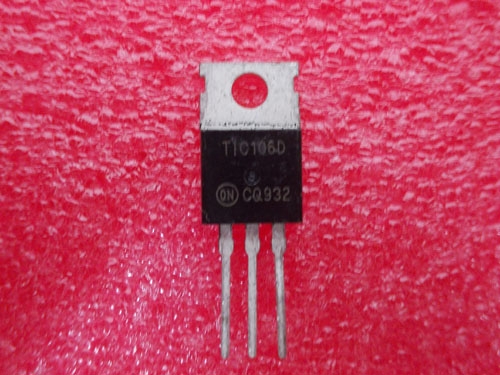
Details
BUY TIC106D https://www.utsource.net/itm/p/12611891.html
| Parameter | Symbol | Min | Typ | Max | Unit |
|---|---|---|---|---|---|
| Repetitive Peak Off-State Voltage | VDRM | 400 | - | 600 | V |
| Repetitive Peak Reverse Voltage | VRSM | 400 | - | 600 | V |
| Non-Repetitive Peak Off-State Voltage | VD(RMS) | 550 | - | 750 | V |
| Non-Repetitive Peak Reverse Voltage | VRS(RMS) | 550 | - | 750 | V |
| RMS On-State Current (Tj = 25掳C) | IT(RMS) | - | 10 | - | A |
| Average On-State Current (Tj = 100掳C) | IT(AV) | - | 8 | - | A |
| Maximum RMS Gate Current | IG(RMS) | - | 0.5 | - | A |
| Maximum Surge Current (Half Sine Wave, 10 ms) | ITSM | - | 50 | - | A |
| Gate Trigger Voltage (Tj = 25掳C) | VGT | 1.5 | 2.5 | 3.5 | V |
| Gate Trigger Current (Tj = 25掳C) | IGT | 50 | 100 | 150 | mA |
| Holding Current | IH | 5 | - | 25 | mA |
| On-State Voltage Drop (IT = 10 A, Tj = 25掳C) | VTM | - | 1.5 | - | V |
| Junction Temperature Range | Tj | -40 | - | 125 | 掳C |
| Storage Temperature Range | Tstg | -40 | - | 125 | 掳C |
Instructions for Use:
Mounting:
- Ensure the TIC106D is securely mounted to a heatsink to maintain optimal operating temperatures.
- Use thermal paste between the device and the heatsink to improve heat dissipation.
Gate Drive:
- Apply a gate trigger voltage (VGT) within the specified range to turn on the device.
- Ensure the gate trigger current (IGT) is sufficient to reliably turn on the device.
Current Handling:
- Do not exceed the maximum RMS on-state current (IT(RMS)) or average on-state current (IT(AV)) ratings.
- For surge currents, ensure they do not exceed the non-repetitive peak values (ITSM).
Voltage Ratings:
- Ensure that the off-state and reverse voltages do not exceed the repetitive peak (VDRM, VRSM) or non-repetitive peak (VD(RMS), VRS(RMS)) ratings.
Temperature Management:
- Monitor the junction temperature (Tj) to ensure it stays within the specified range.
- Store the device in an environment where the storage temperature (Tstg) does not exceed the limits.
Holding Current:
- Ensure the holding current (IH) is maintained to keep the device in the on state.
Testing:
- Before deploying the device in a final application, perform thorough testing to ensure all parameters are within the specified limits and the device operates as expected.
Handling:
- Handle the device with care to avoid mechanical damage or static discharge, which can affect performance.
View more about TIC106D on main site