
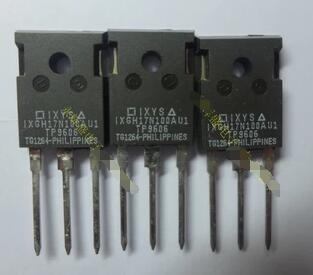
Details
BUY IXGH17N100AU1 https://www.utsource.net/itm/p/12611894.html
| Parameter | Symbol | Min | Typical | Max | Unit | Condition |
|---|---|---|---|---|---|---|
| Drain-Source Voltage | VDS | - | 1000 | - | V | |
| Gate-Source Voltage | VGS | -20 | 0 | 20 | V | |
| Continuous Drain Current | ID | - | 17 | - | A | TC = 25掳C |
| Power Dissipation | PTOT | - | 340 | - | W | TC = 25掳C |
| Junction Temperature | TJ | - | - | 175 | 掳C | |
| Storage Temperature | TSTG | -65 | - | 175 | 掳C |
Instructions:
Handling Precautions:
- Handle the device with care to avoid mechanical damage.
- Use appropriate ESD (Electrostatic Discharge) protection when handling the device.
Mounting:
- Ensure proper thermal management by using heat sinks or other cooling methods if necessary.
- Follow recommended PCB layout guidelines to ensure optimal performance and reliability.
Biasing:
- Apply gate-source voltage (VGS) within the specified limits to avoid damaging the device.
- Ensure that the drain-source voltage (VDS) does not exceed the maximum rating.
Operation:
- Operate the device within the continuous drain current (ID) and power dissipation (PTOT) limits to prevent overheating and potential failure.
- Monitor the junction temperature (TJ) to ensure it remains within the safe operating range.
Storage:
- Store the device in a dry, cool place to prevent moisture damage.
- Avoid exposing the device to extreme temperatures outside the storage temperature range (TSTG).
Testing:
- Use appropriate test equipment and methods to verify the device parameters.
- Refer to the datasheet for specific test conditions and procedures.
View more about IXGH17N100AU1 on main site