
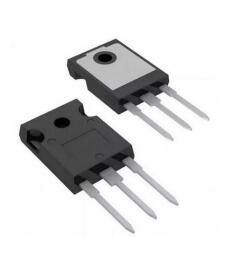
Details
BUY TAS880021ADCAR https://www.utsource.net/itm/p/12612043.html
| Parameter | Description | Value |
|---|---|---|
| Part Number | Part Number | TAS880021ADCAR |
| Function | Function | 2.1 Channel Digital Input Class D Audio Amplifier |
| Power Supply Voltage | Operating Voltage Range | 4.5V to 16V |
| Output Power | Continuous Average Power Output (BTL, 8惟, THD+N = 1%) | 2 x 30W + 60W |
| Signal-to-Noise Ratio (SNR) | SNR (A-weighted) at 1kHz, 8惟 Load | 105dB |
| Total Harmonic Distortion + Noise (THD+N) | THD+N (A-weighted) at 1kHz, 8惟 Load, 1W Output | 0.005% |
| Efficiency | Efficiency at 1kHz, 8惟 Load, 10W Output | 90% |
| Sampling Rate | Supported Sampling Rates | 32kHz to 192kHz |
| Digital Inputs | Digital Input Interfaces | I2S, TDM |
| Control Interface | Control Interface | I2C, SPI |
| Package Type | Package | QFN-48 (7x7mm) |
| Operating Temperature | Operating Temperature Range | -40掳C to +85掳C |
| Storage Temperature | Storage Temperature Range | -65掳C to +150掳C |
| Humidity | Relative Humidity | 0% to 95% (Non-condensing) |
Instructions for Use:
Power Supply:
- Ensure the power supply voltage is within the specified range (4.5V to 16V).
- Use a stable power supply to avoid voltage fluctuations that can affect performance.
Output Configuration:
- Connect the amplifier outputs to the speakers using appropriate gauge wires.
- For BTL (Bridge-Tied Load) operation, connect the positive terminal of one speaker to OUT1+ and the negative terminal to OUT1- for the first channel, and similarly for the second and third channels.
Digital Input Configuration:
- Connect the digital audio source to the I2S or TDM input pins as per the datasheet.
- Configure the input format and sampling rate via the control interface (I2C or SPI).
Control Interface:
- Use the I2C or SPI interface to configure the amplifier settings such as volume, mute, and other parameters.
- Refer to the datasheet for specific register addresses and configuration values.
Thermal Management:
- Ensure adequate heat dissipation by mounting the amplifier on a heatsink or a PCB with good thermal conductivity.
- Monitor the temperature during operation to prevent overheating.
Electrostatic Discharge (ESD) Protection:
- Handle the device with ESD protection measures to avoid damage.
- Use proper grounding and anti-static wrist straps when handling the device.
Testing and Validation:
- Perform initial testing with low power levels to ensure correct operation.
- Gradually increase the power output while monitoring the performance and temperature.
For detailed specifications and additional information, refer to the official datasheet and application notes provided by the manufacturer.
(For reference only)View more about TAS880021ADCAR on main site