
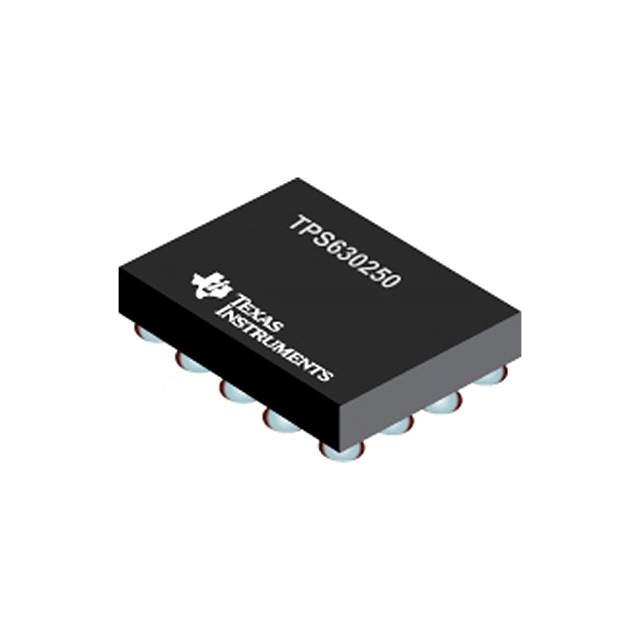
Details
BUY TPS630250RNCT https://www.utsource.net/itm/p/12612190.html
| Parameter | Symbol | Min | Typical | Max | Unit | Conditions |
|---|---|---|---|---|---|---|
| Input Voltage | VIN | 2.7 | - | 5.5 | V | Continuous Operation |
| Output Voltage | VOUT | 1.8 | - | 3.3 | V | Adjustable |
| Output Current | IOUT | - | 2.5 | - | A | Continuous Operation |
| Efficiency | 畏 | - | 95 | - | % | Typical at 3.3V, 1A |
| Switching Frequency | fSW | - | 2.1 | - | MHz | Fixed |
| Quiescent Current | IQ | - | 40 | - | 渭A | No Load, VIN = 5V |
| Shutdown Current | ISD | - | 0.5 | - | 渭A | VIN = 5V, EN = 0V |
| Soft-Start Time | tSS | - | 1.5 | - | ms | Typical |
| Thermal Shutdown Temperature | TSD | - | 160 | - | 掳C | Typical |
| Operating Junction Temperature | TJ | -40 | - | 125 | 掳C | Storage and Operation |
Instructions for TPS630250RNCT
Input Voltage (VIN):
- Ensure the input voltage is within the range of 2.7V to 5.5V.
- Use appropriate input capacitors to stabilize the input voltage.
Output Voltage (VOUT):
- The output voltage can be adjusted between 1.8V and 3.3V using external resistors.
- Connect the feedback pin (FB) to a voltage divider formed by two resistors to set the desired output voltage.
Output Current (IOUT):
- The device can provide up to 2.5A of continuous output current.
- Ensure proper heat dissipation if operating near the maximum current to avoid overheating.
Efficiency:
- The efficiency is typically around 95% at 3.3V and 1A.
- Use low ESR capacitors and inductors to maximize efficiency.
Switching Frequency (fSW):
- The switching frequency is fixed at 2.1MHz.
- This helps in reducing the size of external components like inductors and capacitors.
Quiescent Current (IQ):
- The quiescent current is typically 40渭A with no load.
- This low quiescent current helps in extending battery life in portable applications.
Shutdown Current (ISD):
- The shutdown current is typically 0.5渭A when the enable pin (EN) is low.
- Use this feature to reduce power consumption when the device is not in use.
Soft-Start Time (tSS):
- The soft-start time is typically 1.5ms.
- This helps in reducing inrush current and stabilizing the output during startup.
Thermal Shutdown Temperature (TSD):
- The device will shut down if the junction temperature exceeds 160掳C.
- Ensure adequate cooling and thermal management to prevent thermal shutdown.
Operating Junction Temperature (TJ):
- The operating junction temperature range is from -40掳C to 125掳C.
- Ensure the device operates within this temperature range to avoid damage or performance degradation.
Additional Notes:
- PCB Layout:
- Follow recommended PCB layout guidelines to ensure optimal performance and thermal management.
- Component Selection:
- Choose high-quality, low ESR capacitors and inductors to minimize losses and improve efficiency.
- Testing:
- Test the circuit under various load conditions to ensure stable operation and meet design specifications.
View more about TPS630250RNCT on main site