
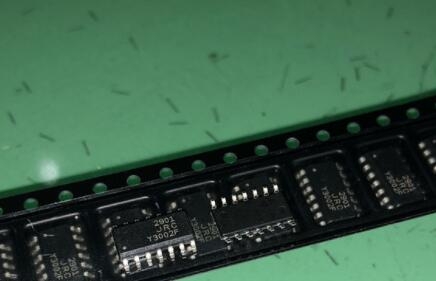
Details
BUY NJM2901CG-TE2 https://www.utsource.net/itm/p/12612261.html
| Parameter | Symbol | Conditions | Min | Typ | Max | Unit |
|---|---|---|---|---|---|---|
| Supply Voltage | VCC | - | 4.5 | - | 5.5 | V |
| Operating Temperature | TA | - | -40 | - | 85 | 掳C |
| Storage Temperature | TSTG | - | -65 | - | 150 | 掳C |
| Input Offset Voltage | VIO | VCC=5V | -1 | - | 1 | mV |
| Input Bias Current | IB | VCC=5V | - | 30 | - | nA |
| Input Offset Current | IOS | VCC=5V | - | 5 | - | nA |
| Open Loop Gain | AVOL | VCC=5V | - | 100 | - | dB |
| Slew Rate | SR | VCC=5V | - | 0.5 | - | V/渭s |
| Bandwidth (Small Signal) | fT | VCC=5V | - | 1.5 | - | MHz |
| Output Short-Circuit | - | - | - | - | - | - |
| Quiescent Current | IQ | VCC=5V | - | 1.5 | - | mA |
Instructions for Use
Power Supply:
- Ensure the supply voltage is within the specified range of 4.5V to 5.5V.
- Use appropriate decoupling capacitors (typically 0.1渭F and 10渭F) close to the power pins to stabilize the supply voltage.
Input Signals:
- The input signals should be within the common-mode input voltage range, which is typically from 0V to VCC - 1.5V.
- Avoid applying voltages outside the supply range to the inputs to prevent damage to the device.
Output Configuration:
- The output can drive loads directly, but ensure the load impedance is suitable for the output current capabilities of the op-amp.
- For maximum output swing, use a load resistor that matches the output impedance of the op-amp.
Temperature Considerations:
- Operate the device within the temperature range of -40掳C to 85掳C to ensure reliable performance.
- Store the device in an environment with temperatures between -65掳C and 150掳C to avoid damage during storage.
Stability:
- To ensure stability, use feedback resistors and capacitors as recommended in the application notes.
- Avoid using high-gain configurations without proper compensation to prevent oscillation.
Handling:
- Handle the device with care to avoid static discharge, which can damage sensitive components.
- Follow standard ESD (Electrostatic Discharge) precautions when handling the device.
Mounting:
- Mount the device on a PCB with proper thermal management if operating at high temperatures or under high power conditions.
- Ensure good soldering connections to all pins to avoid intermittent issues.
Testing:
- Before final assembly, test the device in a controlled environment to verify its performance parameters.
- Use a multimeter or oscilloscope to check the supply voltage, input signals, and output signals for correct operation.
View more about NJM2901CG-TE2 on main site